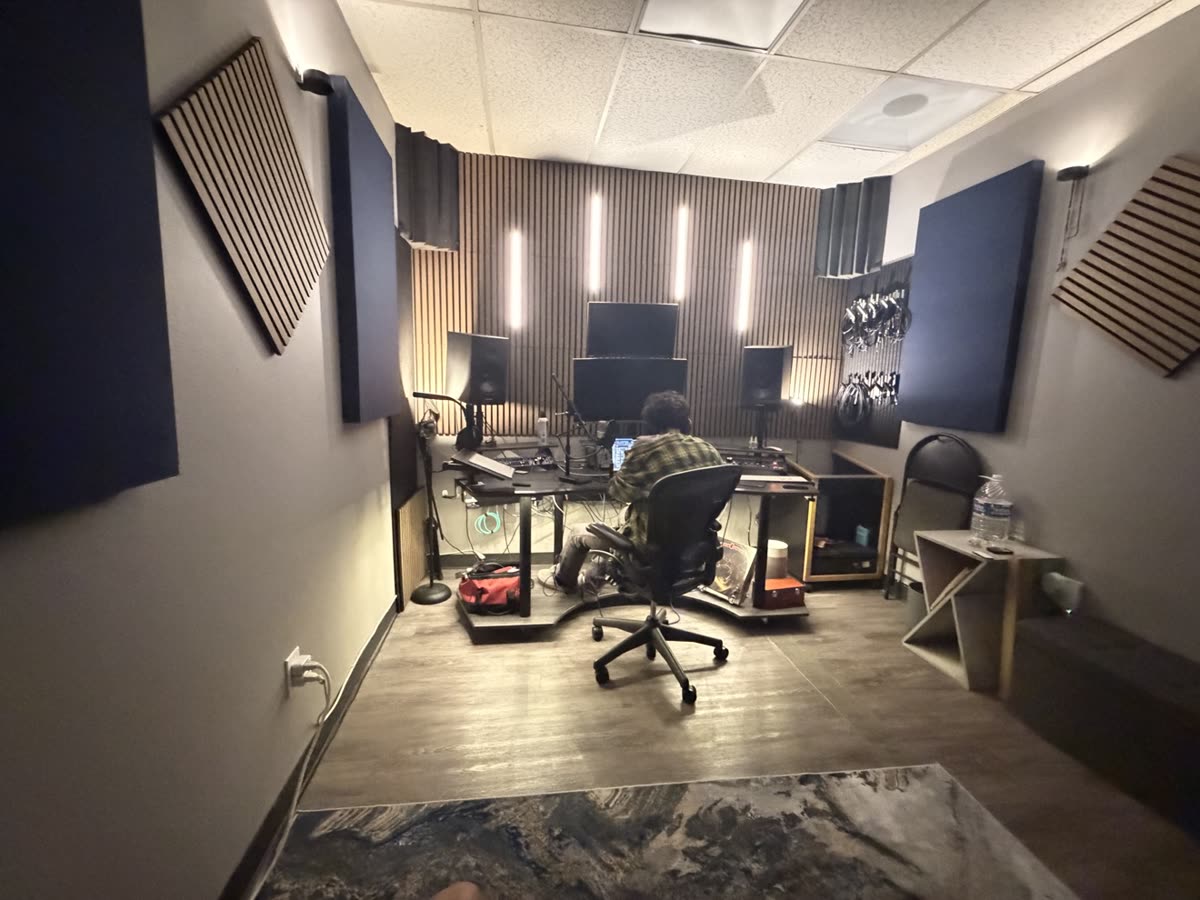
Your first recording session goes better when the work happens before you walk in. The studio part is straightforward — at AMPED UP AUDIO in El Monte, recording is $40/hour · with engineer included, so an engineer runs the room while you perform. Your part is showing up with a song you can actually perform, the files the session needs, and a clear idea of what you want to leave with. Here is how to do that, step by step.
AMPED UP AUDIO has been operating since October 2025, and the pattern is the same for almost every first session: prepared artists get more finished music out of the same booked time. None of this takes special equipment. It just takes a little honesty about what is ready and what is not.
Know the song before you book the time
Recording: $40/hour · with engineer
Every recording session at AMPED is $40/hour with engineer included. Mixing stays flat: $100 for a 2-track mix, $150 for a full stem mix.
- Practice to the real instrumental. Run the full song out loud, start to finish, to the exact beat you plan to record over — not a similar one, not a version from memory. If you cannot get through it at home without stopping, the studio will not fix that; it will just record it.
- Record rough phone takes. A voice memo tells you the truth: where you run out of breath, where the timing drifts, where a line is too crowded to say cleanly. Fix those spots before the session, while fixing them is free.
- Lock the writing. Decide your verses, hook, ad-libs, and any doubles or harmonies you want ahead of time. Small changes in the room are normal. Rewriting a verse in the room uses the session for writing instead of recording.
- Rest your voice. Get sleep the night before, drink water through the day, and avoid shouting yourself hoarse before you record. A tired voice is the one thing no amount of session time can undo.
A simple test: if you can perform the song twice in a row, comfortably, you are ready to record it. If not, another day of practice will do more for the record than another hour in the studio.
What to bring to the session
You do not need to bring recording equipment — the room and the engineer are the point of booking a studio. What you do need is everything the session cannot start without:
- Your beat or instrumental files, on your phone plus a backup copy you can open — a cloud link, a USB drive, or a second device. Files locked inside an app you cannot export from can stall a session before it starts.
- Your lyrics in a readable format. Notes app, printed page, whatever you can actually read while performing. Scrolling through old messages looking for the second verse wastes the clock.
- Useful session notes, if you have them: the song's tempo and key, and one or two reference songs that show the sound you are aiming for. You do not need them, but they help the engineer understand your direction faster.
- Water and whatever keeps you comfortable for a focused block of work. Recording is repetitive — take, listen, adjust, take again — and staying comfortable keeps your performance consistent.
Booking itself is simple: you send a request, the studio confirms your time with you directly, and a $40 deposit — your first hour — locks the confirmed session. The full price picture is on the services page, and we broke the math down in How Much Does a Recording Studio Cost in El Monte?
What actually happens in the room
First sessions feel unfamiliar mostly because the routine is new. In practice it is a loop: the engineer sets levels and gets the track ready, you record a take, you both listen back, and you decide what to keep, what to punch in, and what to try again. The engineer handles the technical side — levels, playback, and keeping the takes organized — so your only job is the performance.
A few habits make that loop work better. Speak up early if the beat feels too loud or too quiet in your headphones; that is an easy fix and it affects every take. Listen to playbacks honestly instead of assuming the last take was the best one. And keep notes on which takes you liked as you go — by the end of the session, they all start to blur together.
When the recording is done, mixing is a separate step with its own flat prices: a 2-track mix is $100 when your song sits on a single stereo instrumental, and a full stem mix is $150 when the elements arrive separated and each one gets balanced on its own. You do not have to decide that before your first session — but knowing the difference helps you plan what a finished song will take.
The short version
Prepare the song until you can perform it without stopping, bring your files in two places and your lyrics in a form you can read, rest your voice, and arrive knowing what a finished result looks like for you. Do that, and a first session at $40/hour · with engineer at AMPED UP AUDIO in El Monte goes to making the record — not to fixing things that could have been handled at home. New to comparing studios as well? Start with Best Recording Studios in El Monte & the San Gabriel Valley.
Or call/text (626) 602-8481.
Questions first-timers ask
What should I bring to my first recording session?
Bring your instrumental or beat files on a phone and a backup copy, your lyrics in a readable format, water, and any notes about tempo, key, or reference songs if you have them. At AMPED UP AUDIO in El Monte, recording is $40/hr with an engineer included, so you do not need to bring recording equipment.
How should I practice before a recording session?
Practice the full song out loud to the actual instrumental until you can get through it without stopping. Record rough takes on your phone, fix the spots where you run out of breath or lose the timing, and decide your ad-libs and doubles before you arrive so studio time goes to recording, not rewriting.
How long does a first recording session take?
It depends on how prepared the song is and how many songs you plan to record. A prepared artist can usually track a song and still have time to review takes in a short session, while writing or arranging in the room takes longer. If you are unsure, start with a shorter session and add time on a future visit.
What does the engineer do during my session?
The engineer runs the recording session — setting levels, running the recording software, playing back takes, and keeping the session moving — so the artist can focus on performing. At AMPED UP AUDIO, an engineer is included in every recording session at $40/hr with an engineer.